(Sobre excerto de História Trágica Com Final Feliz)
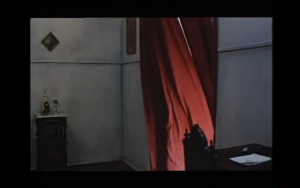
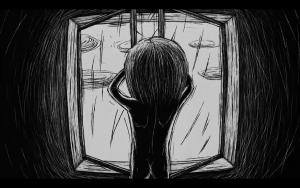
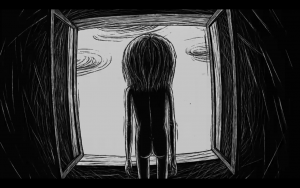
Talvez a menina tivesse uma doença cardíaca, mas acho que não morreu, porque as pessoas ficam a olhar para o céu. Não, não era uma doença, ela era diferente. Normalmente as pessoas não gostam do que é diferente. E ela não era feliz com que as pessoas pensavam. Ela não gostava de estar ali e ainda não tinha descoberto qual era o lugar onde gostava de estar, ainda não tinha descoberto que pertencia aos pássaros. Quando fica feliz ganha asas.
(About Tragic Story with Happy Ending excerpt)
Maybe the girl had a heart condition, but I don’t think she died, because people stare up at the sky. No, it wasn’t a disease, she was different. Usually people don’t like what’s different. And she wasn’t happy with what people thought. She didn’t like being there and she hadn’t figured out where she liked to be yet, she still hadn’t found out that she belonged to the birds. When she’s happy, she grows wings.
__
(Sobre o excerto de Morangos Silvestres)
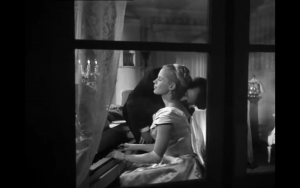
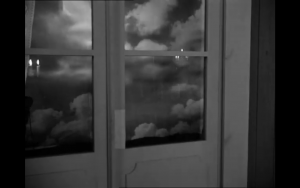
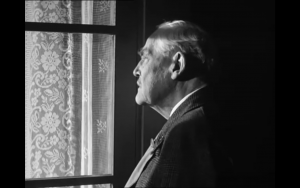 Ele olha como quem quer ver melhor o que está do outro lado, e aproxima-se e a câmara também e vemos um casal junto e acho que por causa da música ele fica triste por não estar a acontecer alguma coisa como ele queria que acontecesse. Ele está a olhar para a vida antiga dele, está a rever uma memória e sente-se sozinho.
(About Wild Strawberries excerpt)
He looks like he wants to get a better look at what’s on the other side, and so he approaches and does the camera too and we see a couple together. I think because of the music he’s sad that something isn’t happening like he wanted it to happen. He’s looking at his old life, he’s reviewing a memory, and he feels alone.
__
(Sobre o excerto de Rafa)
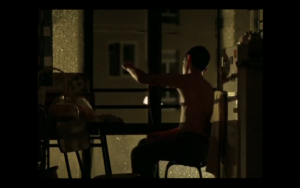
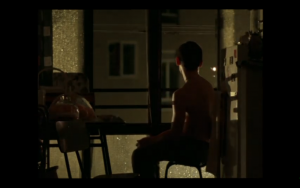
Já era tarde – não há claridade quase nenhuma. A casa deles é num prédio, num bairro – 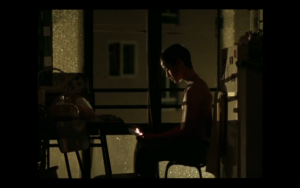 vê-se outros prédios da janela e quando passa alguém ele olha para baixo. Eles estão quase às escuras, só entra a luz do candeeiro lá de fora e eles falam baixinho porque é de noite e por causa do bebé. Há um certo desespero porque a mãe não volta. E quando ele queima o papel eu acho que isto tem a ver com a mãe e que significa que ele perdeu a esperança que ela volte.
Eu senti-me sozinho ao ver este excerto, porque eu à noite quando não sei se tenho a presença de um adulto sinto-me desprotegido.
(About Rafa’s excerpt)
It was late – there’s almost no clarity. Their house is in a building, in a small neighborhood – we see other buildings from the window, and when someone walks by he looks down. They are almost in the dark, only the lamp light comes from outside and they speak quietly because it is night and because of the baby. There’s near a despair because the mother won’t come back. And when he burns the paper I think it has to do with the mother and that means he’s lost hope that she’ll come back.
I felt alone watching this excerpt, because at night when I don’t know if I have the presence of an adult I feel unprotected.
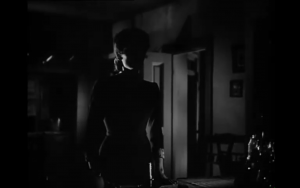
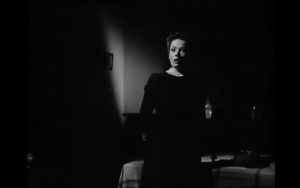
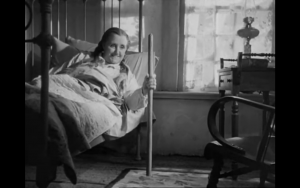 Excerto de How Green was my valley: Uma senhora bate com um pau no chão e o miúdo bate com o pau no tecto para saberem que estão lá. Estão os dois deitados na cama e não podem sair. Primeiro a janela está fechada e vê-se neve, é inverno e depois a janela está aberta e entram dois pássaros no quarto, é primavera. Quer dizer que eles estão ali deitados há meses.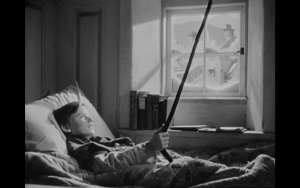
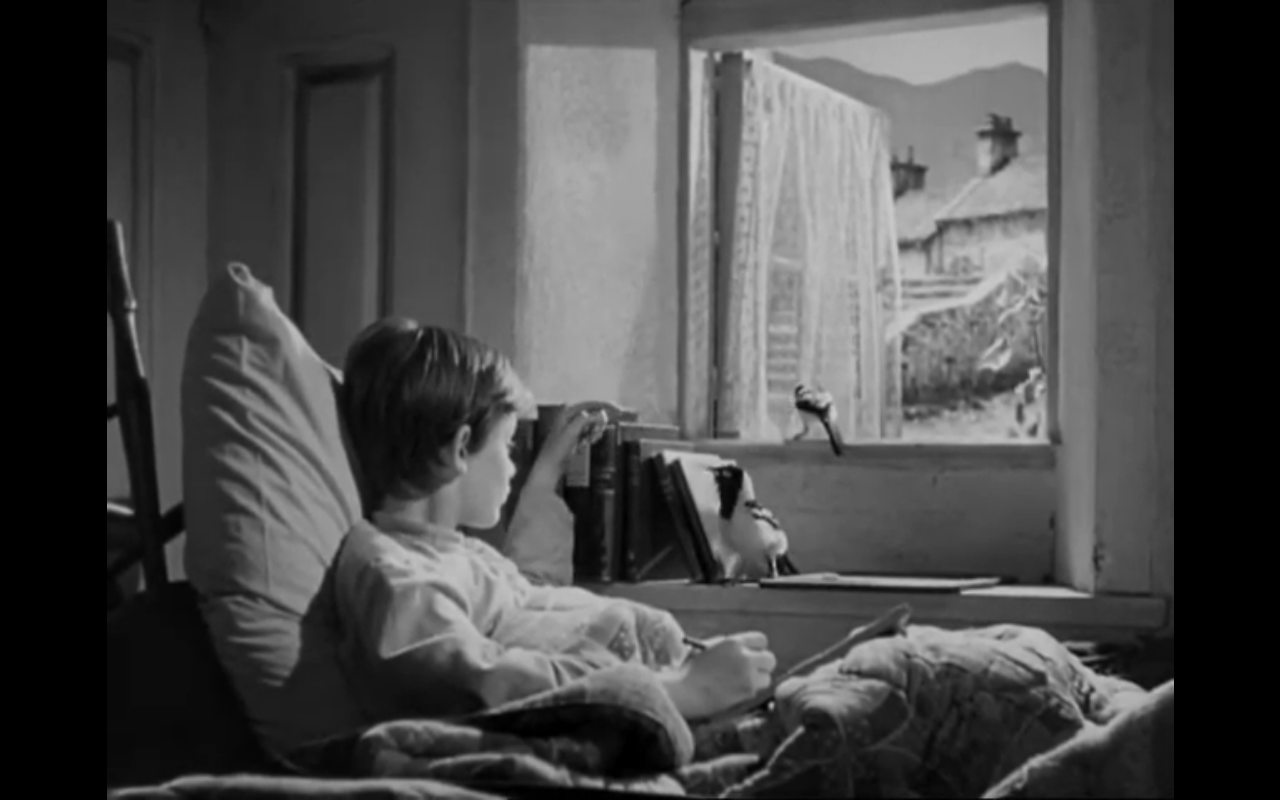
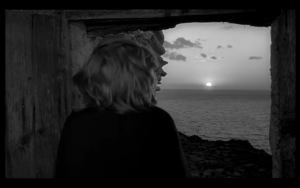
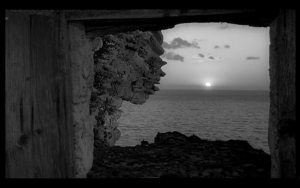
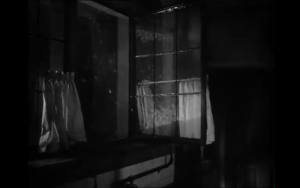
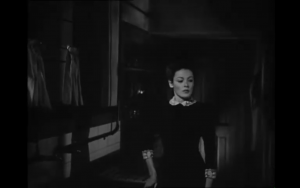
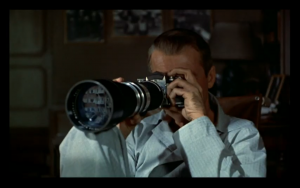
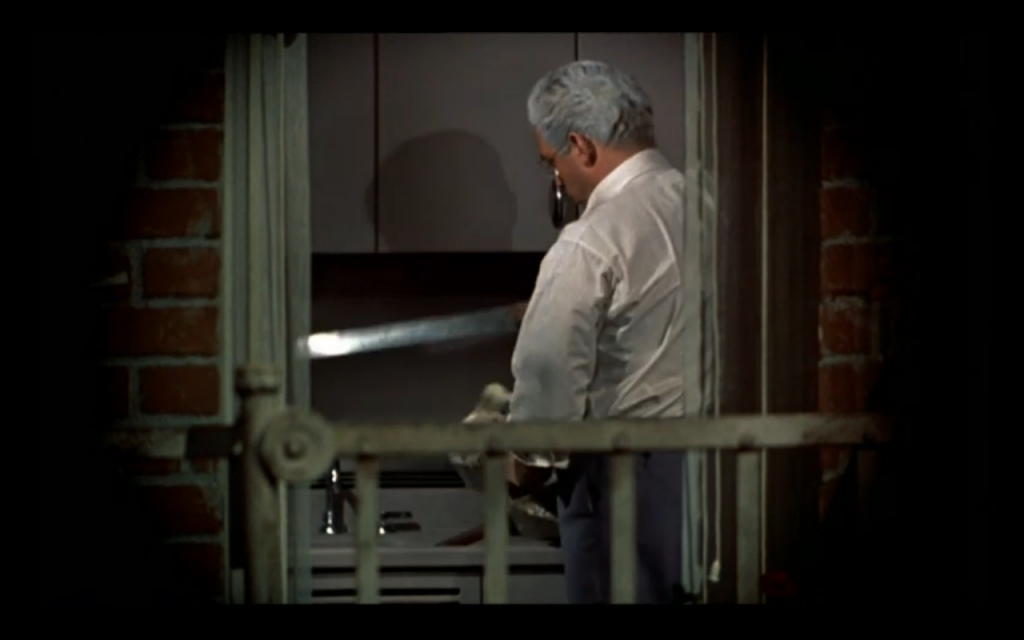
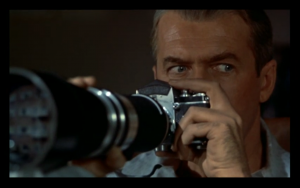 In the Rear Window (Hitchcock) excerpt; there is a man who got hurt in the leg and so is stuck at home (probably he can’t get out because there are too many stairs) and as he has nothing to do he looks out the window and ends up discovering things he probably shouldn’t. The camera sometimes shows what he sees, sometimes shows he looking. The camera captures the perspective of his eyes and the plans get closer because he looks through the binoculars and then through a camera lens, to see better and better.
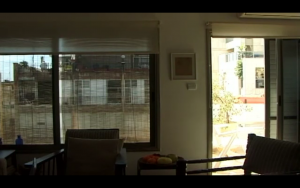 porque os prédios têm muitas janelas e muitas pessoas. No primeiro, vemos quem olha, no segundo, não sabemos quem é. Num a personagem está dentro de casa a olhar para alguém que também está dentro de casa, no outro é alguém que está dentro de casa a olhar para as pessoas que estão nas varandas.
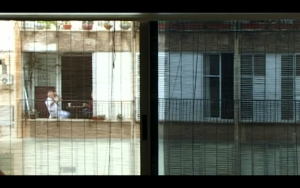 In the excerpt from Lá Bas (Akerman), I had the feeling that we can always be watched without knowing. As in the Rear Window. Here is also someone who observes and does not want to be observed, but in this excerpt the window is not open, is closed and has the blinds. Looks like it was someone walking by the window and staring out. In both excerpts we are in buildings looking at buildings, which is important because the buildings have many windows and many people. In the first, we see who looks, in the second, we don’t know who it is. In one the character is inside the house looking at someone who is also inside the house, in the other is someone who is inside the house looking at people who are on balconies.